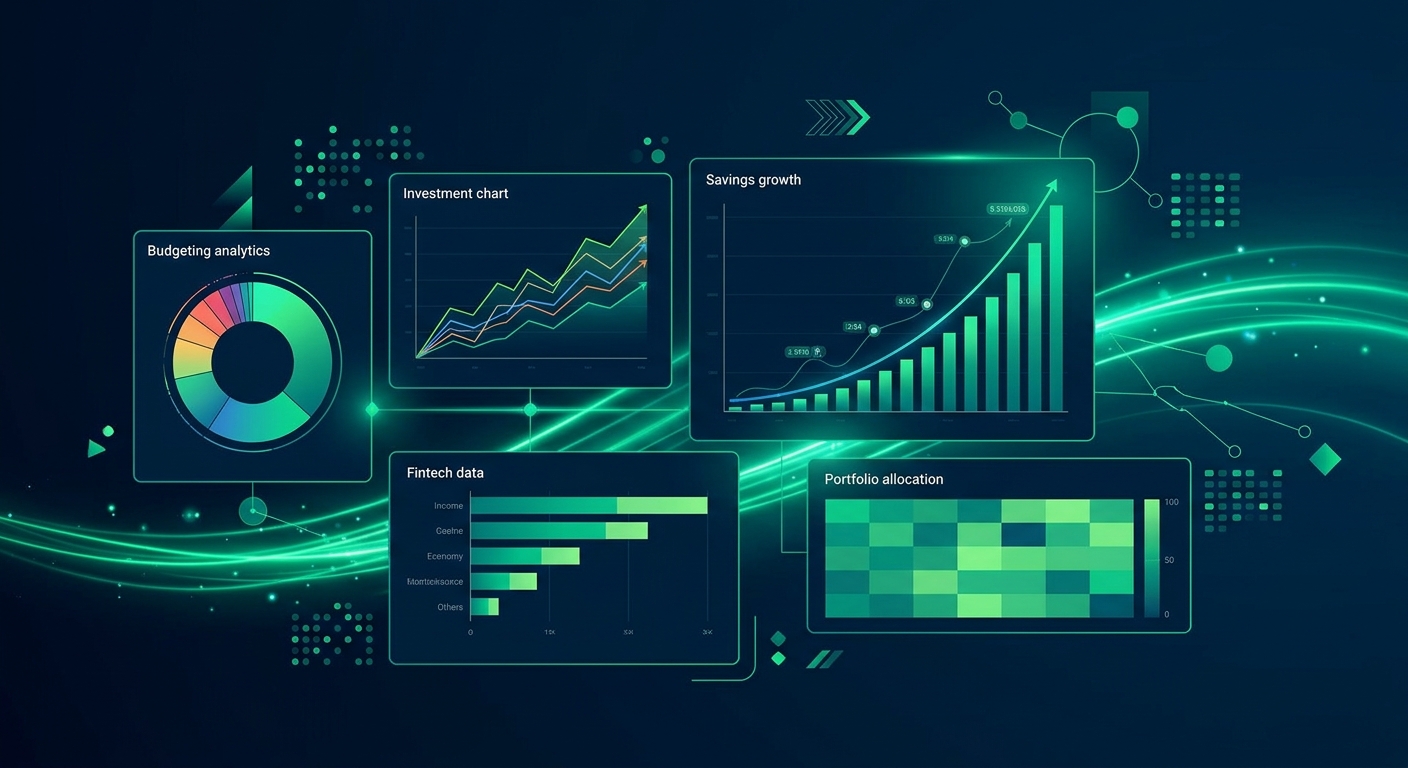
Managing money has never been a data problem. Most people already have plenty of data.
Bank statements, credit card transactions, savings accounts, and investment portfolios generate information every day. The challenge is turning that information into useful decisions.
That’s where AI-powered finance tools come in.
Modern personal finance apps can automatically categorise spending, identify unusual transactions, forecast future cash flow, and provide insights that would normally require hours of manual analysis. The goal is not to replace financial judgement but to make better decisions faster.
Why AI Finance Tools Are Growing in Popularity
AI-powered financial tools are becoming more sophisticated.
Many can:
- Categorise transactions automatically
- Forecast future cash flow
- Track investments
- Monitor spending habits
- Identify unusual activity
- Provide savings recommendations
The best tools save time while helping users understand their financial behaviour more clearly.
1. Copilot Money
Copilot Money is designed for people who want a comprehensive overview of their finances.
The platform automatically categorises transactions, tracks spending patterns, and combines banking and investment accounts into a single dashboard.
Rather than simply showing where money was spent, it helps users identify patterns and trends that may otherwise go unnoticed.
Best For
- Budget tracking
- Spending analysis
- Investment monitoring
2. Origin
Origin takes a broader approach to financial planning.
Alongside budgeting features, it includes retirement forecasting, cash-flow planning, and long-term financial modelling.
One particularly useful feature is the ability to see how changes in savings rates today may affect future retirement outcomes.
Best For
- Retirement planning
- Long-term financial goals
- Household finances
3. Rocket Money
If subscriptions are eating away at your budget, Rocket Money may be worth considering.
The platform specialises in identifying recurring charges, forgotten subscriptions, and opportunities to reduce monthly expenses.
Many users discover services they no longer use but continue to pay for each month.
Best For
- Subscription tracking
- Expense reduction
- Monthly savings
4. YNAB (You Need A Budget)
YNAB remains one of the most respected budgeting tools available.
While many finance apps focus heavily on automation, YNAB encourages users to be intentional with every pound, dollar, or naira they spend.
AI-assisted categorisation helps reduce manual data entry while maintaining a disciplined budgeting framework.
Best For
- Goal-based budgeting
- Spending discipline
- Financial awareness
5. Monarch Money
Monarch Money is built with families and couples in mind.
Managing household finances becomes significantly easier when multiple people can access the same financial dashboard and track shared goals together.
The platform combines budgeting, net worth tracking, and collaborative planning tools in one place.
Best For
- Couples
- Families
- Shared financial planning
6. ElektraFi
Investors may find ElektraFi particularly useful.
The platform combines investment and banking data to provide portfolio insights, risk assessments, and opportunities for rebalancing.
Rather than manually analysing every holding, users receive intelligent recommendations and observations automatically.
Best For
- Portfolio tracking
- Risk management
- Investment insights
7. Plaid-Powered Financial Apps
Although Plaid is not a budgeting app itself, it powers many of today’s leading finance platforms.
Plaid acts as a secure bridge between banks and financial applications, allowing users to connect accounts without sharing login details directly with third-party apps. According to the source article, OAuth authentication and read-only access help improve security and reduce risk.
Best For
- Secure account connectivity
- Financial account aggregation
- Faster onboarding
How to Choose the Right AI Personal Finance Tool
Before signing up for any platform, ask yourself:
- Do I need help budgeting?
- Am I trying to reduce spending?
- Do I want retirement planning tools?
- Am I focused on investing?
- Will multiple people need access?
The truth is that there is no universal “best” finance app.
The best tool is the one that solves your biggest financial challenge.
A Quick Word on Security
Before connecting any financial accounts, take a few precautions:
- Use strong passwords and multi-factor authentication.
- Review the platform’s privacy policy.
- Avoid entering sensitive information into AI chat interfaces.
- Look for secure bank connections that use OAuth and read-only access.
Technology can make managing money easier, but security should never be an afterthought.
Final Thoughts
AI-powered personal finance tools have evolved rapidly.
Today’s platforms can categorise transactions, forecast future cash flow, monitor investments, and provide useful financial insights that once required specialist software or professional advice.
However, no app can replace strong financial habits.
The most successful people combine technology with consistent saving, intentional spending, and regular financial reviews.
If you’re curious about AI money management, choose one tool, connect a single account, and test it for 30 days. You may be surprised by the insights it reveals about your finances.
Continue Your Wealth Building Journey
If you’re interested in building digital assets and learning from real-world experiences, you may also enjoy: